🎯 A Guided Tour Doesn’t Have to Look Like a Traditional Guided Tour!

When you hear the words guided tour, what specific image immediately comes to mind?

For a great number of people, the term conjures up a very traditional and rigid scenario.

👨‍🏫 A guide standing stiffly in front of a large, restless group of strangers.

📢 Speaking loudly or into a microphone just so thirty people can hear over the city noise.

📅 Reciting endless lists of dates, kings, forgotten wars, and monumental historical events.

😴 Meanwhile, half the group is secretly checking their watches and wondering when the next coffee break will finally arrive.

Of course, there is absolutely nothing wrong with traditional sightseeing excursions, and many travelers genuinely enjoy them. But the reality of modern travel is that an organized excursion doesn’t have to follow that old-fashioned formula at all.

In fact, we firmly believe that the most memorable travel experiences often look completely different from the status quo.

That is exactly why our primary focus centers on crafting personalized private guided tours in Budapest that adapt to your rhythm.

You can read all the details about our highly recommended introductory route by visiting our Budapest Introduction Tour program overview.

However, you should keep in mind that this specific itinerary is merely a starting point for your upcoming adventure.

The real question you should be asking yourself as you plan your journey is:

🤔 What Would YOU Like to Explore?


🍺 Want to Discover the Best Beers in Budapest?

Perhaps textbook history isn’t your biggest passion, and you would prefer a more contemporary look at local culture.

Maybe your absolute dream afternoon involves wandering through historic districts, visiting vibrant neighborhood bars, sampling exceptional local brews, learning about unique Hungarian brewing traditions, and discovering hidden local hangouts you would never stumble across on your own.

That exact experience can absolutely become the blueprint for your personalized afternoon out.

Instead of listening to dry lectures about medieval monarchs, your local expert might show you:

  • 🍻 Which authentic Hungarian beers the locals actually order when they go out.
  • 🍻 Exactly where to find the absolute best craft beer bars tucked away in the city center.
  • 🍻 Why several innovative Hungarian microbreweries are rapidly gaining international acclaim.
  • 🍻 Which hidden neighborhood pubs the typical tourists almost always miss entirely.

For many travelers, this hands-on approach sounds like a whole lot more fun than trying to memorize precise historical dates from the 15th century.


🎨 Interested in Street Art and Ruin Bars?

The capital city of Hungary is globally famous for its incredibly unique and atmospheric ruin bars.

These former abandoned tenement buildings and factory spaces have been creatively transformed into some of the most artistic, eclectic nightlife venues anywhere in Europe.

Instead of a standard historical route, you might prefer spending your valuable vacation time exploring:

  • 🎭 Eclectic ruin bars filled with vintage furniture and local art installations.
  • 🎨 Massive, colorful street art murals painted by local creative collectives.
  • 📸 Hidden courtyards that reveal the secret architectural history of the city.
  • 🍷 Sophisticated wine bars showcasing regional European vintages.
  • 🎶 Intimate live music venues tucked away in basement cellars.

Instead of rushing frantically between famous crowded monuments, you have the freedom to spend your time exploring the specific subcultures that match your personal interests.

And because this is a completely private excursion, we can easily slow down the pace, stop whenever you want to grab a refreshing drink, take plenty of photos, or simply sit back and enjoy the vibrant local atmosphere.

No unnecessary rushing from site to site.

No high-pressure schedules to maintain.

No large groups of strangers waiting on you to catch up.


🌳 Escape the City and Explore the Hills of Budapest

Many first-time visitors don’t realize just how incredibly green and geographically diverse the landscape actually is.

The bustling urban center is closely surrounded by dense forests, rolling hills, panoramic viewpoints, and quiet nature trails.

Maybe after a few intense days of urban sightseeing, you find yourself craving a breath of fresh air and something completely different.

Imagine a customized outdoor experience focused primarily on:

  • 🥾 Easy, refreshing hiking trails suitable for any fitness level.
  • 🌲 Peaceful forest walks far away from the noisy traffic of the city center.
  • 📷 Incredible viewpoints offering panoramic vistas of the winding Danube River.
  • 🌅 Beautiful sunset photography opportunities from the highest peaks.
  • 🚡 A nostalgic ride on the historic, youth-operated Children’s Railway.
  • 🚠 Scenic chairlift adventures gliding gently down the verdant hillsides.

The sweeping elevated views over the cityscape are absolutely spectacular, yet many mainstream visitors never even realize they exist.

A knowledgeable private guide can easily help you step off the beaten path to discover a completely different, natural side of the region.


🍽️ Build a Tour Around Food

Sampling local cuisine is frequently the absolute fastest and most delicious way to truly understand a new culture.

Why not make excellent food and drink the central theme of your entire day?

A culinary-focused itinerary could easily include:

  • 🥨 Sampling savory, traditional Hungarian snacks from bustling local market halls.
  • 🌶️ Tasting authentic, slow-cooked goulash and rich paprikás dishes made from generational recipes.
  • 🍰 Indulging in elegant, multilayered Hungarian cakes and artisanal pastries.
  • ☕ Relaxing inside magnificent, historic turn-of-the-century European cafés.
  • 🍷 Sipping complex, world-class Hungarian wines sourced from famous regional vineyards.
  • 🥃 Experiencing a traditional, fiery shot of local fruit brandy during a custom Pálinka tasting.

After all, most people vividly remember the incredible flavors they experienced long after they completely forget the exact dates of ancient historical battles.


🚲 Amsterdam Shows What Is Possible

If you think this flexible approach to sightseeing sounds a bit unusual, just consider how people travel in the Netherlands.

Personalized itineraries in the Dutch capital cover almost every niche interest, hobby, and historical topic imaginable.

If you want to see how another major European destination handles custom travel, you can check out these specialized private guided tours in Amsterdam.

When visiting the Netherlands, travelers frequently choose highly targeted experiences centering on:

  • 🚲 The intricate mechanics and history of local cycling culture.
  • 🎨 Masterclasses detailing the lives and techniques of famous Dutch painters.
  • 🏠 Detailed architectural walks focused on historic canal houses and urban design.
  • 🍪 Tasting traditional Dutch street food, local cheeses, and sweet snacks.
  • ☕ The unique evolution and social legalities of local coffee shop culture.
  • 💡 Deep dives into modern Dutch society, progressive values, and community traditions.
  • 📖 Moving historical walks dedicated to the profound local history of World War II.
  • 🌷 Finding peace away from the crowds in beautiful, hidden canal neighborhoods.

Some art enthusiasts spend hours discussing classic paintings in front of a single museum canvas.

Other travelers want to spend their afternoon tasting regional delicacies at local markets.

Some groups only care about capturing the perfect lighting for their travel photography.

And every single one of those choices is a perfectly valid way to experience a brand-new country.

Why should your experience in the heart of Hungary be any different?

exploring amsterdam

🏰 The Same Goes for Prague

The creative possibilities for customized itineraries are equally endless when you travel to the Czech Republic.

You can read all about the diverse options available to travelers by exploring these tailored guided tours in Prague.

Of course, you can always choose to explore the traditional historical highlights, such as:

  • ⛪ The winding cobblestone alleys of the historic Old Town.
  • 🕍 The moving history and preserved monuments of the Jewish Quarter.
  • 🏰 The massive architectural complex of the historic Prague Castle.
  • 🌉 The iconic statues and breathtaking river views from the Charles Bridge.

But perhaps you would rather skip the standard historical lecture to focus on something a bit more interactive.

  • 🍺 Immersing yourself in the world-famous, centuries-old Czech beer culture.
  • 🥘 Enjoying hearty, comforting plates of authentic traditional Czech cuisine.
  • 📚 Uncovering the dramatic political secrets and monuments of Cold War history.
  • 🎭 Learning about folklore, marionette theater, and vibrant local traditions.

Or maybe you simply want to understand the culinary nuances of why traditional Czech goulash is fundamentally different from Hungarian goulash.

Trust us on this one—passionate food lovers have spent surprisingly long, entertaining discussions comparing the distinct spice profiles of those two iconic regional dishes!

charles bridge in prague

🌟 Forget the Stereotypes

The single biggest misconception about booking a local guide is the mistaken belief that the itinerary must follow a rigid, pre-written script.

We absolutely do not see the travel industry that way.

We firmly believe a great sightseeing experience should always be built entirely around your unique personal interests and curiosity.

If you love deep historical context, that is absolutely fantastic.

If you prefer tasting your way through local breweries, that is equally fantastic.

Whether your true passion lies in photography, nature, architecture, fine dining, local folklore, nightlife, or finding hidden gems, every single preference is fantastic.

The true purpose of hiring a private guide is not to listen to someone try to impress you with how many textbook facts they can memorize.

The real purpose is to have a trusted local companion help you experience a new destination in a way that feels deeply meaningful, comfortable, and genuinely enjoyable for you.

Because when you choose a private experience, there are zero expectations or demands coming from other tour participants.

There is never any frustrating need to compromise your precious vacation time.

There is no reason to spend an hour discussing a niche topic that does not interest you in the slightest.

The itinerary becomes entirely yours to shape.


🚀 Let’s Explore Budapest Your Way

This incredible city is so much more than just a collection of famous buildings, stone monuments, and dry chapters in history books.

It is a living, breathing metropolis filled with fascinating human stories, rich flavors, unforgettable viewpoints, unique traditions, hidden corners, and authentic experiences just waiting to be discovered.

Tell us exactly what interests you when you travel.

Tell us what gets you excited to explore a brand-new culture.

Tell us what specific elements of local life you want to learn more about during your stay.

And our dedicated team will do our absolute best to design a personalized experience that feels like it was crafted especially for you.

Because at the end of the day, the absolute best travel experiences are never the ones that strictly follow a corporate script.

They are always the ones that follow your own natural curiosity.

Wanna Bump Into Doué, Dembélé, and Hakimi in Budapest? This Is Where PSG Is Supposed to Live!

Are you coming to Budapest for the Champions League final and secretly dreaming about bumping into Désiré Doué, Ousmane Dembélé, Achraf Hakimi, or some of the other PSG stars? Then you might want to spend some extra time around the legendary New York Hotel at Blaha Lujza Square.

Rumors currently suggest that PSG will stay at the famous New York Palace Hotel during the Champions League weekend in Budapest. While nothing has officially been confirmed by the club itself, several local sources and football fans expect the French giants to use the luxurious hotel as their headquarters before the big final.

And honestly… it would make perfect sense.

The hotel is one of the most elegant and luxurious places in Budapest, famous for the stunning New York Café, crystal chandeliers, marble interiors, and old-world luxury that feels more like a movie set than a normal hotel lobby.

So yes — if you stay nearby, drink coffee in the area, or simply walk around Blaha Lujza Square during the weekend, you might suddenly spot some of the biggest football stars in the world walking past you.

Will Hakimi grab a coffee?
Will Dembélé sneak out with headphones and sunglasses?
Will Doué become the most photographed teenager in Budapest?

Nobody knows.

But football fans will definitely be watching closely.

Want to learn more about the Champions League final itself, tickets, transportation, and what to expect in Budapest during the weekend? Read the full guide here:

Champions League Final 2026 in Budapest: Arsenal vs PSG

What About Arsenal?

So far, no reliable information has been shared about where Arsenal is expected to stay during the Champions League final weekend.

That means Arsenal fans currently have a bit more detective work to do.

Of course, it is entirely possible that both clubs will try to keep their locations as private as possible for security reasons, but in a city like Budapest, rumors spread quickly — especially when thousands of football supporters suddenly appear in luxury hotel lobbies pretending they are “just here for the coffee.”

Budapest Will Be Completely Packed

If you are traveling to Budapest for the final, one thing is absolutely certain:

The city will be FULL.

Hotels are already nearly sold out in many central areas. Restaurants around the city center are expected to be fully booked. Bars, fan zones, river cruises, and tourist attractions will all be overflowing with supporters from both clubs — plus neutral football fans from all across Europe.

In other words:
Do not wait until the last second.

Reserve restaurants early.
Book accommodation immediately if you still have not done so.
And expect massive crowds around the city center, especially near Deák Ferenc Square, Blaha Lujza Square, and the areas around the stadium.

Maybe You Know More?

Do you have further insights about the whereabouts of Arsenal or PSG players during the Champions League weekend in Budapest?

Have you heard rumors about hotels, restaurants, arrivals, or training sessions?

Write a comment and let us hear from you!

Bikas Park in Budapest – Running Tracks, Outdoor Fitness & a Relaxing Green Escape

Looking for a place in Budapest where you can exercise, relax, walk, run, or simply escape the busy city atmosphere for a while? Then Bikas Park might become one of your favorite discoveries in the Hungarian capital.

Located in the southern part of Budapest, in the 11th district, Bikas Park is a modern and family-friendly green area that combines sports, recreation, playgrounds, and peaceful walking paths in a surprisingly nice way.

The park has become especially popular among runners, families with children, and locals who simply want fresh air without leaving the city behind completely.

You can watch this short video from the park right here:

🏃 A Fantastic Place for Running in Budapest

One of the first things many visitors notice is the dedicated running track winding through the park. The soft red surface makes it comfortable for jogging, interval training, or casual evening walks.

One round around the track is approximately 800 meters, making it easy to track your distance without needing a complicated fitness app every second.

Whether you are preparing for a marathon, trying to burn off yesterday’s chimney cake, or simply wanting to justify eating another plate of goulash later in the evening, Bikas Park is a great place to move your body.

If you want to discover more places worth visiting in the city, check the overview of popular attractions in Budapest at Budapest attractions.

💪 Outdoor Fitness Equipment for Everyone

Bikas Park is not only for runners. The park also features several outdoor fitness machines and workout stations. You can do stretching exercises, strength training, and bodyweight workouts completely free of charge.

There are machines designed for both beginners and more active fitness enthusiasts, and the atmosphere feels welcoming rather than intimidating. Nobody is screaming motivational quotes at you while flipping tractor tires. It is mostly locals enjoying fresh air and movement.

The outdoor workout area is especially enjoyable during spring and summer when Budapest turns wonderfully green.

🌳 A Park That Feels Surprisingly Peaceful

Even though Budapest is a busy capital city, Bikas Park has a calm atmosphere. The trees create shade during warm summer days, and the wide open grassy areas make it easy to relax.

The park is suitable for:

  • Families with children
  • Joggers and walkers
  • Elderly visitors
  • Couples looking for a quiet stroll
  • Travelers needing a break from sightseeing

You will also find benches, open spaces, and plenty of room simply to sit down and enjoy the surroundings.

🚇 Easy to Reach with Metro Line 4

One of the best things about Bikas Park is how easy it is to reach. The park has its own metro station on the modern M4 metro line, making transportation very simple even for tourists.

You can easily combine a visit to Bikas Park with other sightseeing adventures in Budapest.

Want to know what else is happening in the city during your stay? Visit the Budapest events calendar for concerts, festivals, exhibitions, and special events.

⭐ Worth Visiting?

Absolutely.

Bikas Park may not be as internationally famous as Heroes’ Square or Fisherman’s Bastion, but that is also part of its charm. It offers a more local and authentic Budapest experience where everyday life happens naturally.

Sometimes the best travel memories are not only about famous monuments, but about finding places where the city breathes normally.

And if you enjoy parks, running, outdoor fitness, or simply discovering less touristy corners of Budapest, Bikas Park is definitely worth adding to your list.

From the Danube to the Amstel: Experience Amsterdam with a Private Guide

Have you ever stood on Fisherman’s Bastion in Budapest, looking out over the mighty Danube while a passionate guide shared the city’s dramatic history? Perhaps you remember the taste of a classic Sport-szelet or a fresh Túró Rudi (the legendary Hungarian cottage cheese roll) that you got to sample along the way?

If you are one of the many travelers who have experienced the magic of Budapest with us over the last two decades, we have some exciting news. The world moves, and so do our guides. While we continue to offer our popular private guided tours in Budapest, our lead guide, Sigbjorn, now spends a significant part of the year in the land of tulips and canals. This means you can now experience the same personal, high-quality storytelling in the heart of the Netherlands!

Amsterdam: A City Built on Water and Willpower

It is fascinating to see the similarities between Europe’s great cultural capitals, yet also the stark contrasts. While Budapest flourished along the wide banks of the Danube, Amsterdam’s story began much more modestly.

The name of the city actually tells the entire tale: by the river Amstel, a Dam was built to control the water. The result was Amstel-redam, which over time evolved into the Amsterdam we know today. 🚲

When you wander through Amsterdam’s streets with a guide who deeply understands Norwegian, Hungarian, and Dutch cultures, you gain a unique perspective. You won’t just learn about the leaning houses and the 1,500+ bridges; you’ll see the city through the eyes of someone who has truly made this place home.

What to Expect on a Private Tour in Amsterdam?

A guided tour is so much more than just dates and royal lineages. It’s about the small anecdotes, the hidden alleys, and the flavors that define a nation. Just as we have done for 20 years in Budapest, our Amsterdam tours focus on:

  • Historical Depth: From the Dutch Golden Age to the poignant stories of World War II.
  • Cultural Bridges: How does the Dutch concept of “gezelligheid” compare to the hospitality you find in Budapest?
  • Architectural Wonders: Why are the houses so narrow, and why do they lean forward toward the street?
  • A Taste of the Netherlands: Just like in Budapest, we love to include small culinary breaks. 🧀

A True Taste of Dutch Life

What is the Dutch answer to the Hungarian Sport chocolate? Perhaps it’s a warm, gooey Stroopwafel melting over a cup of coffee, or a bite of aged, creamy Gouda cheese? On a tour with Sigbjorn, you’ll get to taste things that are “exciting and essential” for life in the Netherlands. These small sensory experiences are what make the history truly stick in your memory.

Private Tours: The Personal Touch

In a city as busy as Amsterdam, a private tour allows you to escape the crowds and focus on what interests you most. Whether you are a history buff, an architecture enthusiast, or a foodie, having a private guide means the pace and the stories are tailored specifically to your group.

With over 20 years of experience guiding international guests, we know how to bridge the gap between local secrets and world history, making every walk an engaging conversation rather than a lecture.

Practical Information and Booking

Are you ready to swap the banks of the Danube for the canals of the Amstel? Amsterdam is a city best experienced on foot or from the water, and with a local expert, you can avoid the tourist traps and see the authentic side of the city.

You can read more about our tours and book your next experience here:
👉 Get to know Amsterdam on a private guided tour

Tour Overview

CategoryDetails
LanguageEnglish (with a Scandinavian touch)
FocusHistory, Culture, Architecture, and Local Snacks
DurationFlexible, tailored to your group
Ideal ForFamilies, friends, and curious travelers

Amsterdam is waiting for you with open arms, vibrant flower markets, and centuries of history. Whether it’s your first visit or you’ve been here before, we promise that a tour with a familiar face and a fresh perspective will give you a deeper understanding of this incredible city.

See you at the dam on the Amstel! 🌷

Christmas Markets in Budapest: Vörösmarty Square & St. Stephen’s Basilica (Open Until January 1)

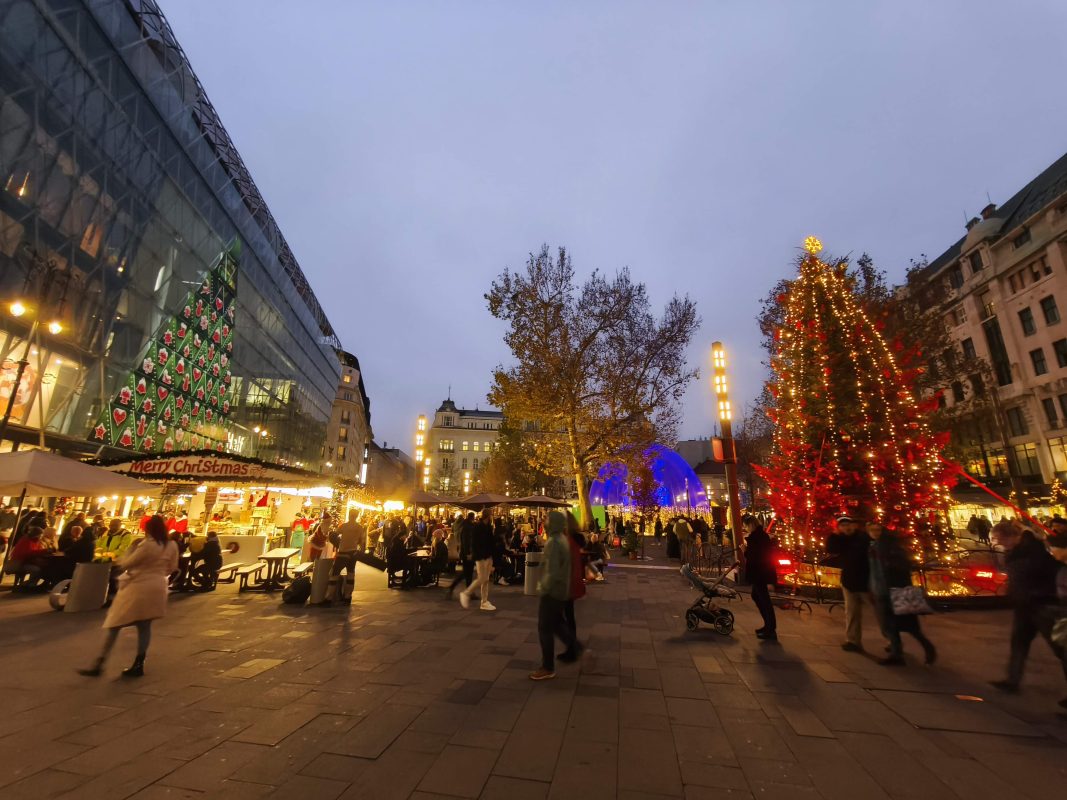
Budapest in December is pure magic. We’ve just visited the two most famous Christmas markets in the city – Vörösmarty Square and the market in front of St. Stephen’s Basilica – and the atmosphere is exactly what you hope for when thinking about a winter city break. Warm lights everywhere, the smell of grilled food and spices in the air, and a lively but cozy buzz that makes you want to slow down and enjoy the moment.

Both markets remain open until January 1, making them perfect not only before Christmas, but also for a festive end-of-year trip.

Vörösmarty Square Christmas Market

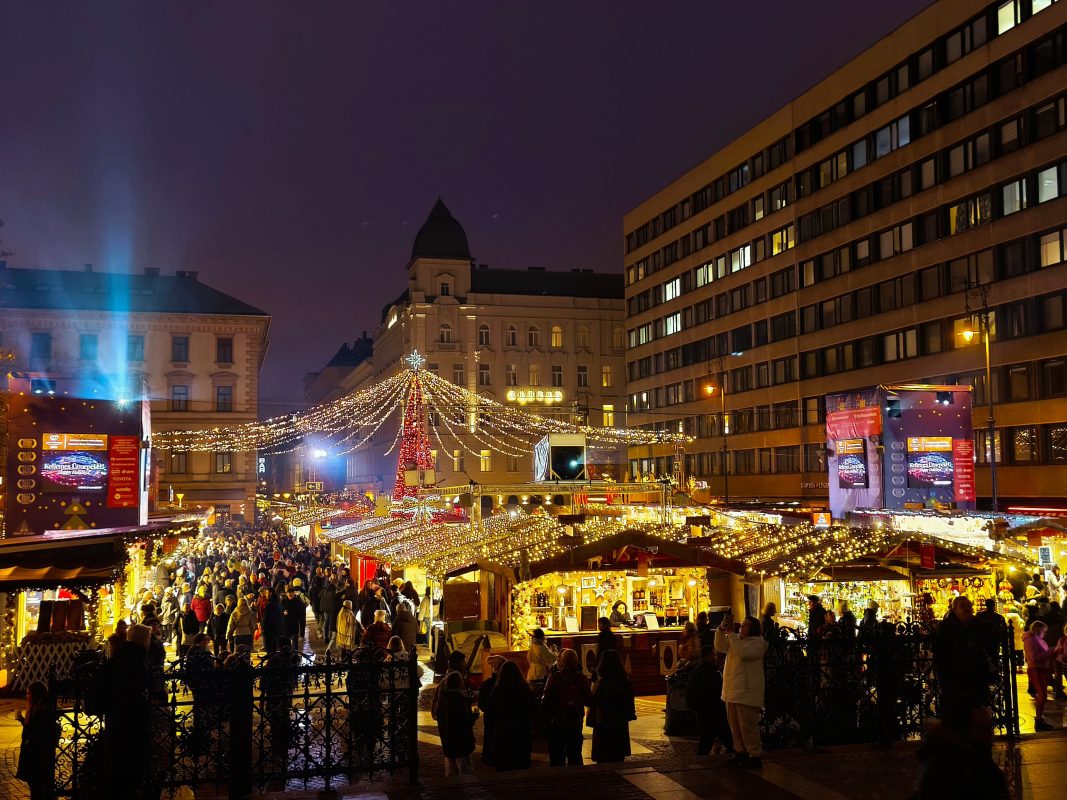
Vörösmarty Square is one of the classic meeting points in Budapest, and during Advent it turns into a glowing Christmas village. Wooden stalls line the square, wrapped in lights, with people gathering around high tables, mugs of hot drinks in hand.

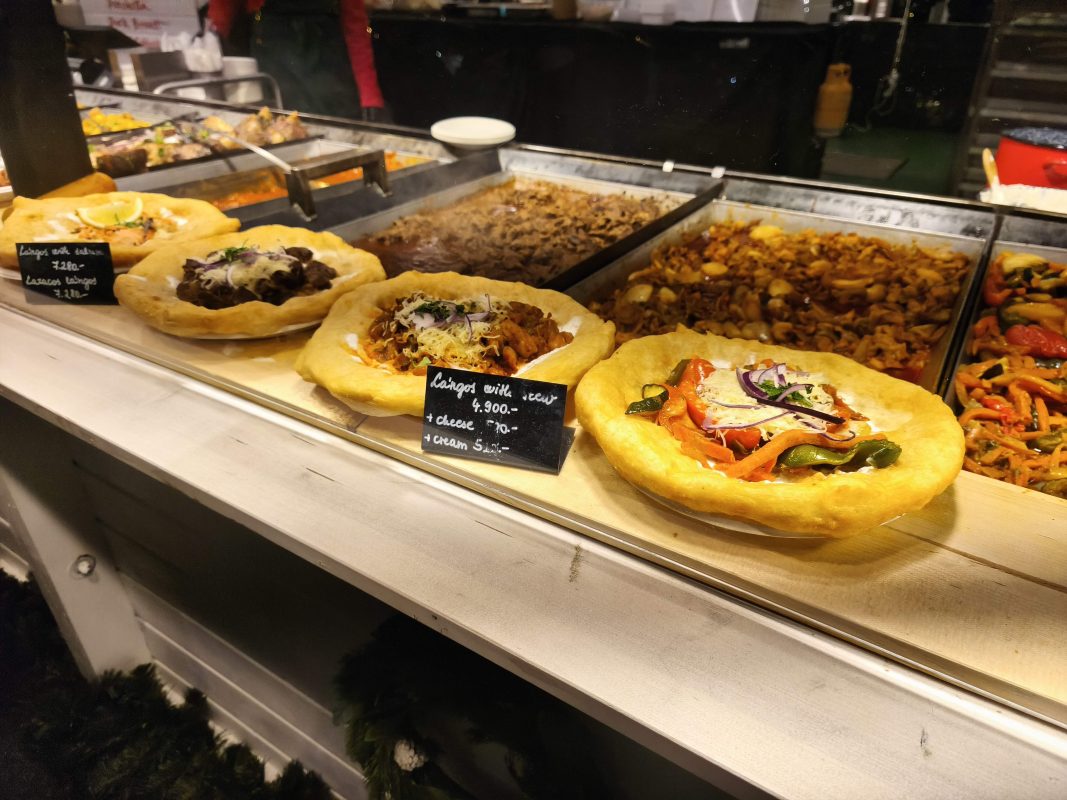
Based on what we saw, food is a big highlight here. You’ll find plenty of Hungarian comfort food, served hot and generously:

  • Lángos with different toppings like sour cream, cheese, stews, or vegetables
  • Slow-cooked meats, including pork and beef dishes, often served with potatoes or bread
  • Sausages in fresh rolls, simple but perfect for cold evenings
  • Traditional sides like pickled vegetables and warm cabbage dishes

The stalls are open, so you can see the food being prepared right in front of you, which adds to the experience. It’s casual, social, and very Hungarian.

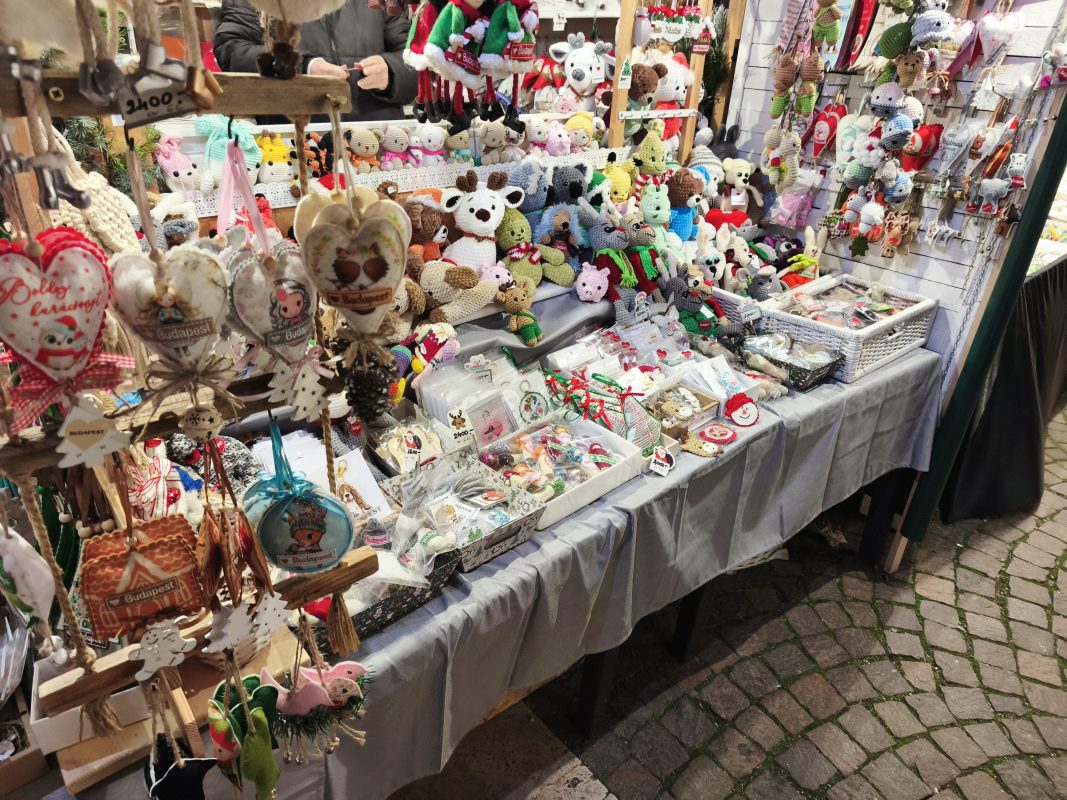
Besides food, there are lots of handcrafted gifts. Knitted toys, Christmas ornaments, small decorations, candles, and locally made souvenirs make this a good place to pick up something unique rather than mass-produced gifts.

Christmas Market at St. Stephen’s Basilica

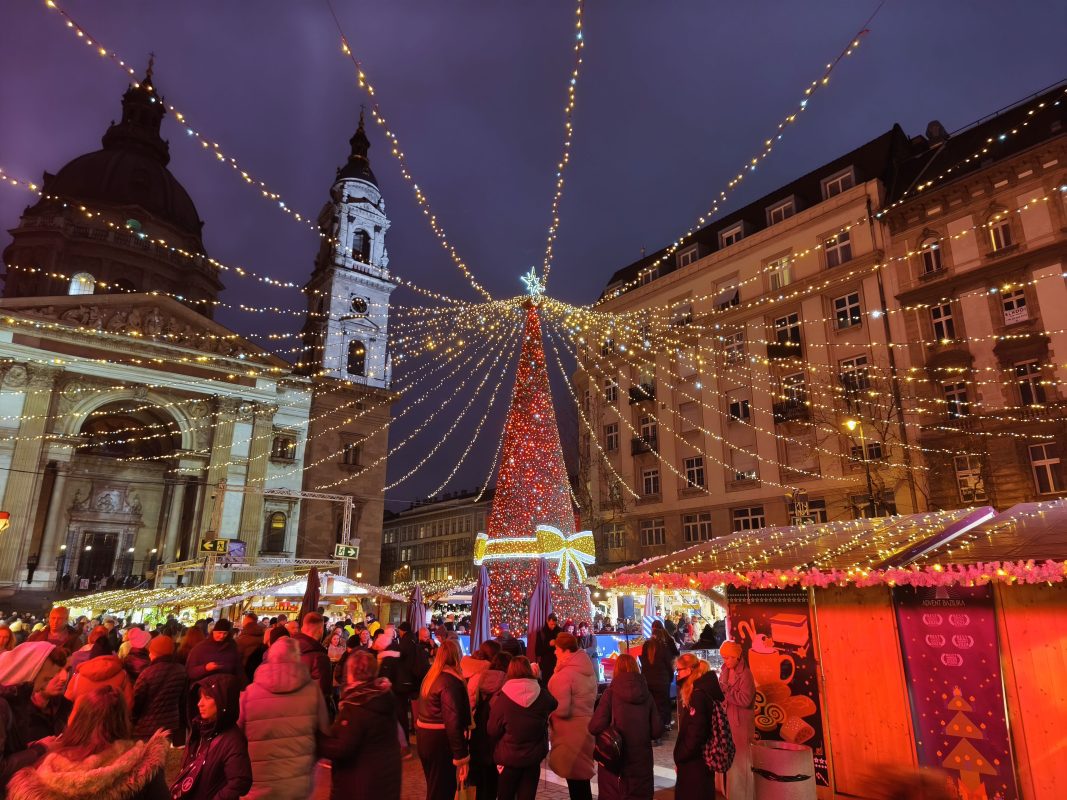
If there’s one place in Budapest that truly feels like a Christmas postcard, it’s the market in front of St. Stephen’s Basilica. The setting alone makes it special. The basilica towers over the square, and after dark the entire area glows.

Here, the Christmas lights are next level. The giant Christmas tree in the center, strings of lights stretching across the square, and illuminated stalls create a warm, festive scene that feels especially magical in the evening.

Food options are similar in spirit but feel slightly more international and polished:

  • Sausages, hot dogs, and grilled meats in fresh bread
  • Rich stews and roasted dishes served straight from large trays
  • Sweet treats and pastries, perfect with a hot drink

This market is also a great place just to stand, watch, and enjoy. Many people come here mainly for the atmosphere, photos, and the light displays on the basilica itself. It’s lively but still romantic, especially later in the evening.

What Makes These Markets Special

What stood out most during our visit was how social everything feels. People gather around shared tables, chat with strangers, take photos, and just enjoy being outside despite the cold. Families, couples, and groups of friends all mix together, making the markets feel welcoming rather than touristy.

The combination of food, lights, music, and historic surroundings is what makes Budapest’s Christmas markets so memorable.

For practical details, dates, and locations, you can find more information here:
https://www.hungarybudapestguide.com/events/christmas-markets/

Other Great Things to Do in Budapest in December

If you have more time than just an evening at the markets, Budapest has plenty of winter-friendly programs in December.

Danube River Cruises

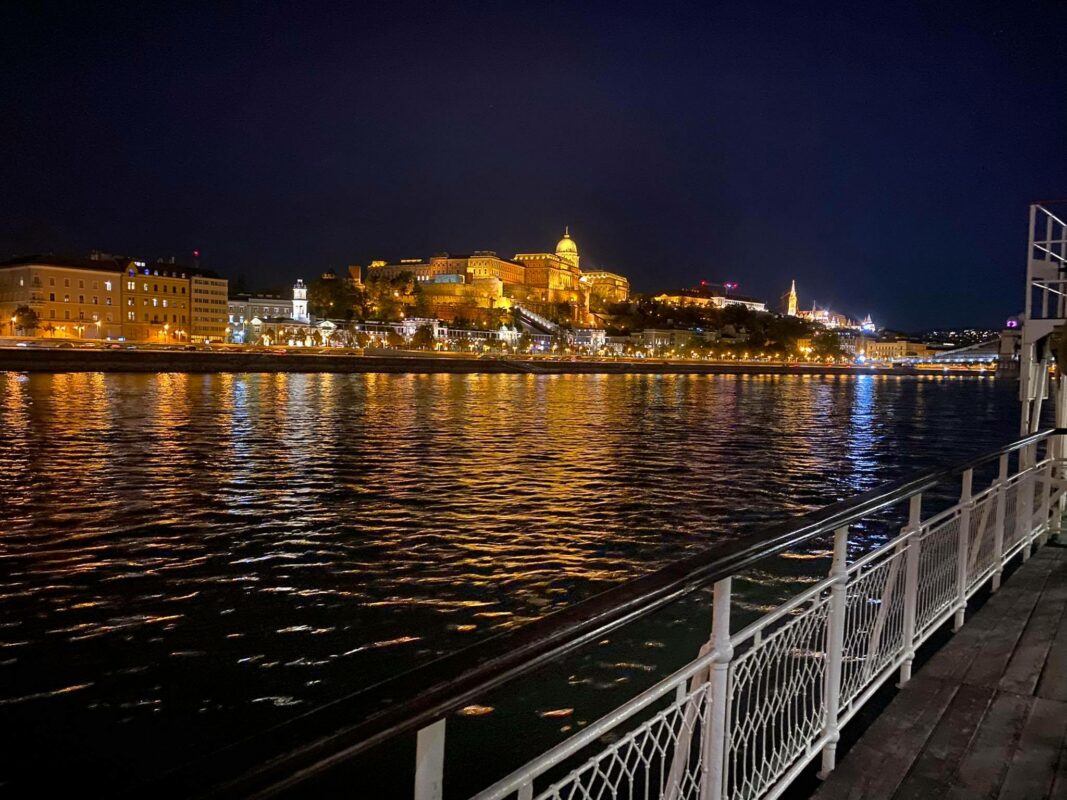
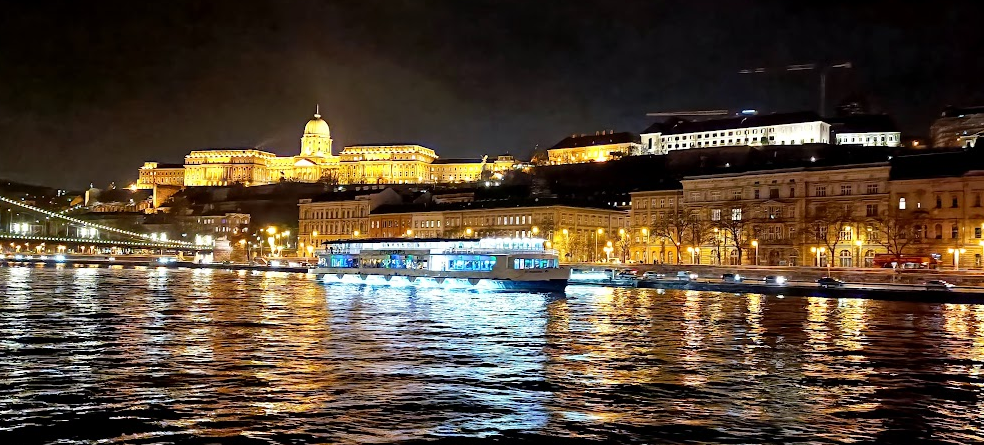
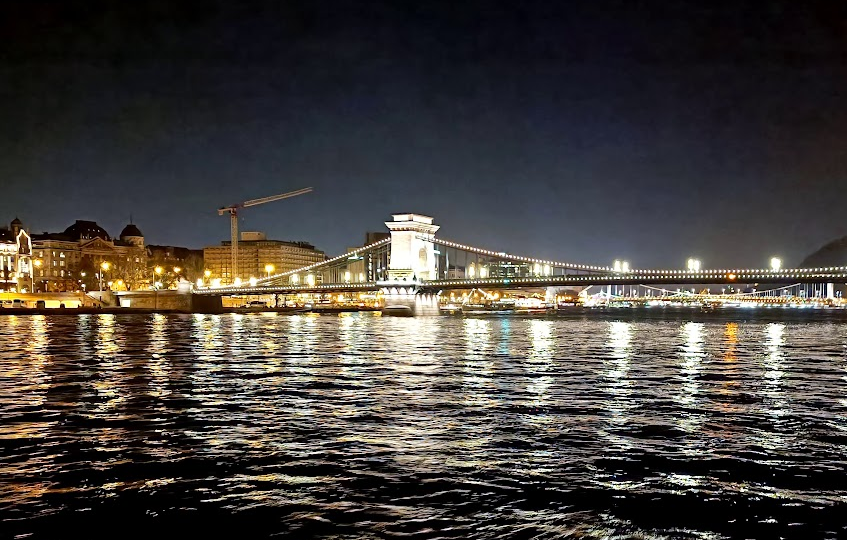
A Danube river cruise is one of the best ways to see Budapest in winter. In the evening, the Parliament, bridges, and riverbanks are beautifully lit, and from the water the city looks especially impressive. Some cruises include drinks or dinner, making it a relaxed and warm break from the cold.

Wine Tasting and Hungarian Cuisine

December is a great time for wine tasting programs. Hungary has excellent wines, and many tastings take place indoors in cozy cellars or wine bars. It’s a perfect complement to heavy winter food and a nice way to learn more about Hungarian culture.

Guided Walking Tours

A guided tour of Budapest in winter can be surprisingly enjoyable. Fewer crowds, festive decorations, and crisp air make sightseeing more pleasant. Many tours focus on history, architecture, or local life, and some even include market visits or food tastings.

Thermal Baths in Winter

While not Christmas-specific, visiting one of Budapest’s thermal baths in December is unforgettable. Sitting in steaming outdoor pools while the air is cold around you is a uniquely Budapest experience and fits perfectly into a winter itinerary.

A Perfect Winter City Break

Between the Christmas markets at Vörösmarty Square and St. Stephen’s Basilica, evening walks along the Danube, and cozy indoor programs, Budapest in December feels festive without being overwhelming. Whether you’re here for a weekend or longer, it’s a city that truly shines during the holiday season – right up until New Year’s Day.

The Gellert Bath to close for several years

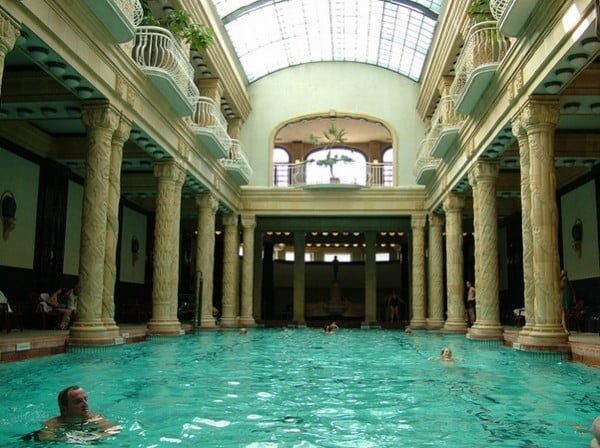
The famous Gellért Thermal Bath, one of Budapest’s most iconic spa complexes, is closing for several years of renovation. For many visitors and locals alike, this comes as bittersweet news. On the one hand, the bath has long been admired for its Art Nouveau architecture, mosaic-tiled pools, and unique historical atmosphere. On the other, many agree that the facilities have shown signs of aging, and a major facelift has been long overdue.

A historical gem in Budapest

The Gellért Bath opened in 1918, becoming one of the jewels of the Danube-side hotel and spa culture. Its decorative halls, stained-glass windows, and ornate thermal pools have welcomed guests from all over the world. For more than a century, Gellért was considered one of the most elegant baths in Budapest, a place where wellness met history.

The closure will undoubtedly leave a gap in the city’s spa scene. Tourists who were hoping to experience its iconic wave pool or relax under its intricate domes will have to wait several years until the renovations are complete. At the same time, Budapest is far from short on alternatives.

The comparison: Gellért vs. Széchenyi

While Gellért Bath has always been admired for its elegance, most tourists and local guides tend to recommend the Széchenyi Thermal Bath instead. The reason is simple: Széchenyi offers a far larger outdoor complex, with multiple open-air pools, including the famous “chess pool” where locals play long matches while soaking in steaming thermal waters.

According to Hungary Budapest Guide’s comparison, Széchenyi comes out ahead for most casual visitors. It is easier to access, has more extensive facilities, and offers a lively, social atmosphere. Gellért, meanwhile, was often favored by those who wanted a quieter, more architectural experience, surrounded by the charm of early 20th-century design.

Now, with Gellért closed for an extended period, visitors will almost automatically turn to Széchenyi as the top choice.

Where else can you go instead?

Budapest is famous for being the “City of Spas,” and that means there are still plenty of options left. Beyond Széchenyi, you can explore the historic Rudas Bath, located just a short walk from Gellért, which also combines Ottoman-era architecture with modern wellness features. Király Bath, though currently under renovation itself, is another historic option, while the newly modernized Palatinus Bath on Margaret Island is a great spot in summer with its large outdoor pools.

For those planning their trip, the Budapest attractions guide provides an overview of other must-see sights that can complement a spa visit, from the Buda Castle District to the Parliament and St. Stephen’s Basilica.

Why the closure matters

The closure of Gellért Bath is more than just the temporary loss of a spa. For Budapest, it means saying goodbye—at least for a while—to a historic building that represents part of the city’s cultural heritage. The renovation promises to restore the complex to its former glory, ensuring that future generations can enjoy both the healing waters and the stunning architecture.

Still, for those who fell in love with the bath’s unique atmosphere, it’s a sad farewell. Many travelers have fond memories of walking through the elegant entrance hall, hearing the echoes of splashing water beneath the domes, or basking in the sunlight streaming through stained-glass windows.

Looking forward

Although it is unclear exactly how long the renovations will last, expectations are high. Once completed, Gellért will likely return stronger than ever, combining the grandeur of its original design with modern comfort. Until then, visitors should plan to explore Széchenyi and other alternatives, making sure not to miss out on one of Budapest’s most famous experiences: a day at the baths.

For up-to-date tips on what to do during your stay, you can check out the What’s happening in Budapest page, which lists concerts, festivals, and seasonal events, perfect for combining with a spa visit.

Final thoughts

Gellért Bath’s closure marks the end of an era, at least temporarily. While it is sad news for those who hoped to include it in their Budapest itinerary, the city remains full of thermal treasures to discover. With Széchenyi Bath leading the way, and a long list of other baths and attractions to explore, Budapest continues to be a dream destination for relaxation and culture.

And when Gellért finally reopens, it will surely reclaim its place as one of the jewels of the city. Until then, take the opportunity to explore what else Budapest has to offer, both inside and outside the steaming waters of its legendary spas.

What Happened to the Public Transportation Boat in Budapest?

For years, Budapest offered a hidden gem for both locals and tourists: a public transportation boat that was not only affordable but also seamlessly integrated into the city’s public transit system. With just a standard transportation pass, you could hop aboard and glide along the Danube River, soaking in breathtaking views of some of the city’s most iconic landmarks. From the majestic Buda Castle perched atop its hill to the verdant slopes of Gellért Hill, the neo-Gothic splendor of the Hungarian Parliament, and the timeless elegance of the Chain Bridge, this boat ride was a budget-friendly way to experience Budapest’s beauty from a unique vantage point. It was the kind of service that made you wonder why every riverside city didn’t offer something similar.

But that’s all in the past now (since 2023). The beloved public transportation boat, once a staple for sightseeing on a dime, is no longer available. Its disappearance has left a gap in Budapest’s otherwise excellent public transit network, much to the disappointment of those who cherished its charm and convenience.

What’s left today?

Today, the only remaining public transportation boat operates far from the city’s bustling center. This lone survivor runs on the southern fringes of Budapest, connecting Csepel-Királyerdő and Molnár-sziget in the Soroksar area. While it serves a practical purpose for locals in that region, it’s a far cry from the scenic route that once captivated visitors. The journey offers little in the way of attractions, with none of the historic or cultural landmarks that draw millions to Budapest each year. For tourists, it’s neither convenient nor compelling—located too far from the city core to be part of a sightseeing itinerary.

So, what’s the consequence of this change? If you’re hoping to enjoy a leisurely cruise along the Danube and take in Budapest’s stunning riverside panorama, you’re now left with one option: the pricier sightseeing cruises offered by private companies. These tours, while undeniably enjoyable, come with a heftier price tag that can feel steep compared to the old public boat’s unbeatable value. What was once an accessible, spontaneous adventure included in your transit pass has morphed into a premium experience, putting it out of reach for budget-conscious travelers.

The loss of the public transportation boat is a quiet blow to Budapest’s reputation as a city that blends affordability with charm. For those still eager to explore the city’s sights without breaking the bank, public transportation remains a viable option—just not by water. Buses, trams, and the metro can still get you close to the major attractions, even if they lack the romance of a river cruise.

If you’d like to learn more about how to make the most of Budapest’s public transportation for sightseeing, check out this helpful guide: How to Do Sightseeing in Budapest Using Public Transportation. It’s a great resource for navigating the city’s streets and discovering its treasures, even without that cherished boat ride.

How to Do Sightseeing in Budapest Using Public Transportation?


Budapest, Hungary’s vibrant capital, is a treasure trove of history, architecture, and culture. From the grandeur of Buda Castle to the thermal baths of Széchenyi, it’s a city that begs to be explored. While walking or taking a taxi might seem tempting, Budapest’s public transportation system—affordable, reliable, and extensive—offers the best way to see it all. Whether you’re marveling at the Parliament Building or sipping coffee by the Danube, here’s how to navigate Budapest’s top sights using buses, trams, metros, and more.

Why Public Transportation?

Budapest’s transit network, operated by BKK (Budapesti Közlekedési Központ), is a tourist’s dream. It’s cheap (a single ticket costs ~450 HUF, or $1.20 USD as of March 2025), eco-friendly, and connects every major landmark. With four metro lines, trams gliding along the Danube, and buses reaching quieter corners, you’ll save time and money while soaking in the city’s charm. Plus, it’s an authentic way to travel like a local.

Getting Started: Tickets and Passes

Before hopping on, grab a ticket or pass. Single tickets (valid for one uninterrupted trip) are available at metro stations, BKK ticket machines, or via the BudapestGO app—download it for real-time schedules too. For sightseeing, consider these options:

  • 24-hour Travelcard: ~2,500 HUF, unlimited rides for a day.
  • 72-hour Travelcard: ~5,500 HUF, perfect for a weekend trip.

Validate tickets on board (trams/buses) or at metro gates. Hang onto them—inspectors do random checks!

AI Generated picture of Budapest.. the reality is much nicer!

Sightseeing Itinerary: Day 1 – Buda Side

Start your adventure on the Buda side, the hilly, historic half of the city.

Buda Castle and Fisherman’s Bastion

  • How to Get There: Take Metro Line M2 (red) to Széll Kálmán tér, then hop on the Castle Bus (Várbusz)—a free shuttle (with a valid ticket) to Buda Castle. Alternatively, ride the iconic Castle Hill Funicular from Clark Ádám tér (near Chain Bridge) for ~4,000 HUF round-trip.
  • What to See: Explore the castle’s courtyards and the Hungarian National Gallery, then stroll to Fisherman’s Bastion for panoramic views of Pest and the Danube.

Matthias Church

  • How to Get There: It’s a short walk from Fisherman’s Bastion—no extra transit needed.
  • What to See: Admire this Gothic masterpiece with its colorful tiled roof and intricate interiors.

Gellért Hill and Citadel

  • How to Get There: From Buda Castle, take bus 27 from Szentháromság tér to Búsuló Juhász, then walk 10 minutes uphill.
  • What to See: The Citadel offers stunning vistas, and the Liberty Statue is a photo must. Descend via trails for a scenic return.

Wrap up with a tram ride on Tram 19 or 41 along the Buda embankment—pure riverside bliss.

Sightseeing Itinerary: Day 2 – Pest Side

Cross to Pest for bustling streets and grand architecture.

Hungarian Parliament Building

  • How to Get There: Take Metro Line M2 to Kossuth Lajos tér.
  • What to See: This neo-Gothic marvel is Budapest’s crown jewel. Book a guided tour to see the Holy Crown of Hungary inside.

St. Stephen’s Basilica

  • How to Get There: From the Parliament, ride Tram 2 (a scenic route along the Danube) to Széchenyi István tér, then walk 5 minutes. You can also walk between the two locations easily, and then enjoy the beautiful Liberty Square during your walk.
  • What to See: Climb the dome for 360-degree views or enjoy the serene interior. Entry is free, but donations are appreciated.

Heroes’ Square and City Park

  • How to Get There: Take Metro Line M1 (yellow)—Europe’s oldest electrified metro—to Hősök tere.
  • What to See: Admire the Millennium Monument, then wander into City Park for Vajdahunyad Castle and the Széchenyi Thermal Bath (more on that next).

Széchenyi Thermal Bath

  • How to Get There: From Heroes’ Square, it’s a 10-minute walk, or take bus 20E to Széchenyi fürdő.
  • What to See: Soak in Budapest’s largest thermal spa. Entry starts at ~12,000 HUF—bring a towel and flip-flops!

Sightseeing Itinerary: Day 3 – Danube Highlights

Focus on the river and its iconic crossings.

Chain Bridge

  • How to Get There: From Pest, take Tram 2 to Széchenyi István tér. From Buda, use bus 16 from Szentháromság tér.
  • What to See: Walk across this historic suspension bridge, linking Buda and Pest since 1849. Snap photos with lion statues guarding each end.

Danube Promenade and Shoes on the Danube

  • How to Get There: From Chain Bridge, stroll along the Pest side or take Tram 2 to Vigadó tér.
  • What to See: The promenade offers river views, while the Shoes on the Danube memorial—60 pairs of bronze shoes—honors Holocaust victims.

Margaret Island

  • How to Get There: Take Tram 4/6 from Pest to Margitsziget, or bus 26 from Árpád híd metro station (M3).
  • What to See: This green oasis has gardens, ruins, and a musical fountain. Rent a bike or relax by the water.

Discovering Budapest via Public Transportation Boat (no longer available)

For a unique perspective, explore Budapest by public transportation boat along the Danube. Operated by BKK, these boats offer a scenic, budget-friendly alternative to tourist cruises. These boats are no longer available (since 2023).

  • Availability: Boats run from mid-March to late October, weather permitting. Services like D11 (Újpest to Haller utca) and D12 (Római fürdő to Haller utca) operate weekdays, with limited weekend runs (e.g., D13). In 2023, high maintenance costs paused services, but as of 2025, they’re back seasonally—check BudapestGO for updates.
  • Payment: Use standard BKK tickets or passes (e.g., 24-hour Travelcard, 2,500 HUF). Single tickets (450 HUF) work too, validated onboard. Boats are free with the Budapest Card on weekdays. Cash or card payments aren’t accepted onboard—buy tickets in advance via the app or at BKK kiosks.
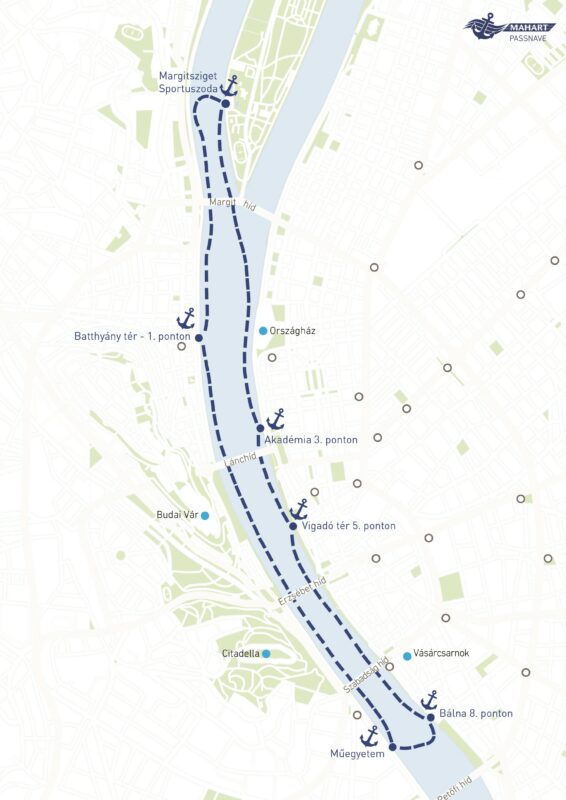
  • What to See: Departing from piers like Boráros tér or Batthyány tér, you’ll glide past the Parliament Building’s illuminated spires, Buda Castle perched atop its hill, and the Chain Bridge’s elegant arches. Look for Gellért Hill’s Citadel and Margaret Island’s greenery. The zigzagging route offers unobstructed views of Pest’s vibrant skyline and Buda’s historic charm—perfect for photos.

Tips for a Smooth Ride

  • Timing: Metros run every 2-5 minutes during peak hours (5 AM–11:30 PM), trams and buses every 10-15 minutes. Check BudapestGO for night bus options after midnight.
  • Crowds: Avoid rush hours (7-9 AM, 4-6 PM) for a comfier ride.
  • Accessibility: Most metros (except M1) and newer trams/buses are wheelchair-friendly—look for blue symbols.
  • Language: Signs are in Hungarian, but key stops have English announcements.

Why It Works

Budapest’s compact size makes public transit ideal. The metro’s four lines—M1 (yellow), M2 (red), M3 (blue), and M4 (green)—form the backbone, while trams like Tram 2 offer postcard-worthy views along the Danube. Buses fill gaps, reaching hilly Buda or outer Pest. A 72-hour pass (~$15 USD) covers it all, leaving you free to hop on and off without breaking the bank.

Beyond the Sights

Public transit isn’t just practical—it’s part of the experience. Ride the vintage M1 metro for a history lesson, or watch locals bustle on Tram 4/6, one of Europe’s busiest lines. Pair your journey with a kürtőskalács (chimney cake) from a street vendor near a stop, and you’re living Budapest life.

Final Thoughts

Sightseeing in Budapest by public transportation is efficient, affordable, and fun. From Buda’s castles to Pest’s baths, every landmark is a ride away. So, grab a travelcard, download BudapestGO, and let the city unfold before you—no car required. Have a favorite Budapest spot? Share it—I’d love to hear your picks!

Exploring Budapest and Surroundings by Car: All you must know!

Many people who come to Hungary have heard about Budapest and somehow believe that the Hungarian capital is all the country has to offer. That is a big mistake, and in this article, we would like to give you some great tips that will help you not only explore the surroundings of Budapest by car but also discover the entire city of Budapest in ways that would be much harder unless you sit behind the steering wheel of a car.

The city of Budapest covers an area of 525 square kilometers, while the country of Hungary has a size of 93,030 square kilometers (similar to a country such as Portugal). Budapest is in the center of the country, which means that you can get to almost anywhere in the country within 2 1/2 hours of driving, making it easy to explore, even the most hidden spots and locations where tourists seldom place their feet.

Budapest has always been a big and important city, which means that it has big and wide streets, and it is fairly easy to drive in the city by car. The biggest problem at times might be finding a free parking lot, but there are more and more parking houses, and also several locations at which you can park your car at a very low cost near the center of Budapest. In this article, we want to share information that you will find useful as you explore Budapest and Hungary by car, some advice on the process of renting a car, and lots of tips on where you should go once you have a car available for use.

Important tips if you want to use a rental car in Budapest and Hungary.

There are several things you need to watch out for and pay attention to in the process of renting a car. The most important is that you will often get better prices if you plan ahead. Do your price research and always use car rental comparison websites, as they provide plenty of choices. Discover Cars is one we highly recommend. In addition to offering a great selection of car rental options in Budapest, the website is user-friendly and provides all the necessary information upfront. As you book your rental car early, it is also important to use a service that allows you to cancel your reservation (without you losing money) as closely as possible to the actual booking date. Even if you have heard about one special brand, keep your eyes open, compare the prices of several companies, and read reviews written by other users.

It is crucial to use a service that gives you easy access to the car. If you arrive at Budapest Airport, you should be able to pick up the car directly in the terminal building, or have a shuttle bus provided by the car rental company that will take you the short distance to where the rental car is located. You will get all the information you need to get access to your car quickly during the booking process, meaning there shouldn’t be any reason to worry!

Are you going to stay in a hotel in Budapest? Do not forget to find a hotel where you can park your car! Not all hotels offer such services, especially in the inner districts, and that might give you lots of stress and a big mess as you need to pay for parking in the street, renew your parking ticket throughout the day, and it will cost you a lot of additional money. In other words, find a hotel that offers car parking at a good price, or a hotel outside the city center where you can park your car for free. As you leave Budapest, most hotels offer parking free parking or at a very low cost.

Driving on the roads of Hungary.

Hungary has very nice highways that take you quickly in the direction of big cities such as Székesfehérvár, Györ, Debrecen, Szeged, Pécs, and Eger. If you drive even further, you can even visit the capitals of neighboring countries such as Vienna (Austria), Bratislava (Slovakia), Ljubljana (Slovenia), Zagreb (Croatia), and Belgrade (Serbia) within two to four hours. But, do not forget that you need to pay a highway fee in Hungary which you can buy for either 1 day, 10 days, 1 month, or 1 year. If you rent your car, do not forget to check if the car already has a highway vignette, or if you need to buy one yourself for the time of your car rental.

You can buy your e-vignette and check the prices at https://ematrica.nemzetiutdij.hu/en/vignette-purchase.

Like most of the countries in Europe, the steering wheel is on the left side in Hungarian cars, and you drive on the right side of the way. There are gas stations located frequently along highways and in cities, so it is easy to fill gas on the car if it is about to get empty. The prices are always in Hungarian Forint, and as you pay, it is always wise to pay with the local currency, because most gas stations use a very bad conversion rate for those eager to pay with Euro instead of the Hungarian Forint.

The highways of Hungary have a maximum speed limit of 130km/h, but even though you drive at this speed, you should keep to the right, as many drivers come faster and they will start blinking and drive into your “butt” if you keep left and don’t keep right to make way for those eager to drive faster in the left lane.

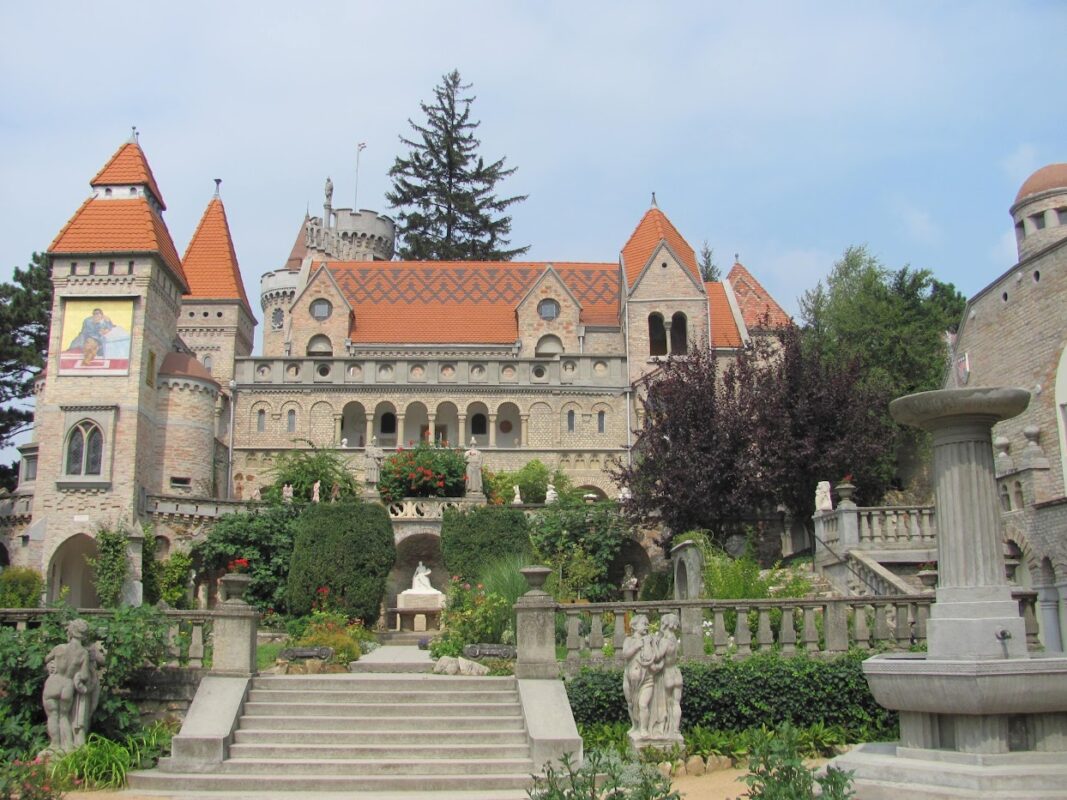
Bory castle in Székesfehérvár is a fantastic place to visit if you have a car available during your stay in Hungary.

Where to go with a car in Hungary?

You are sitting in your car ready to explore Budapest and Hungary… what next?

Some places worth visiting outside the city center of Budapest.

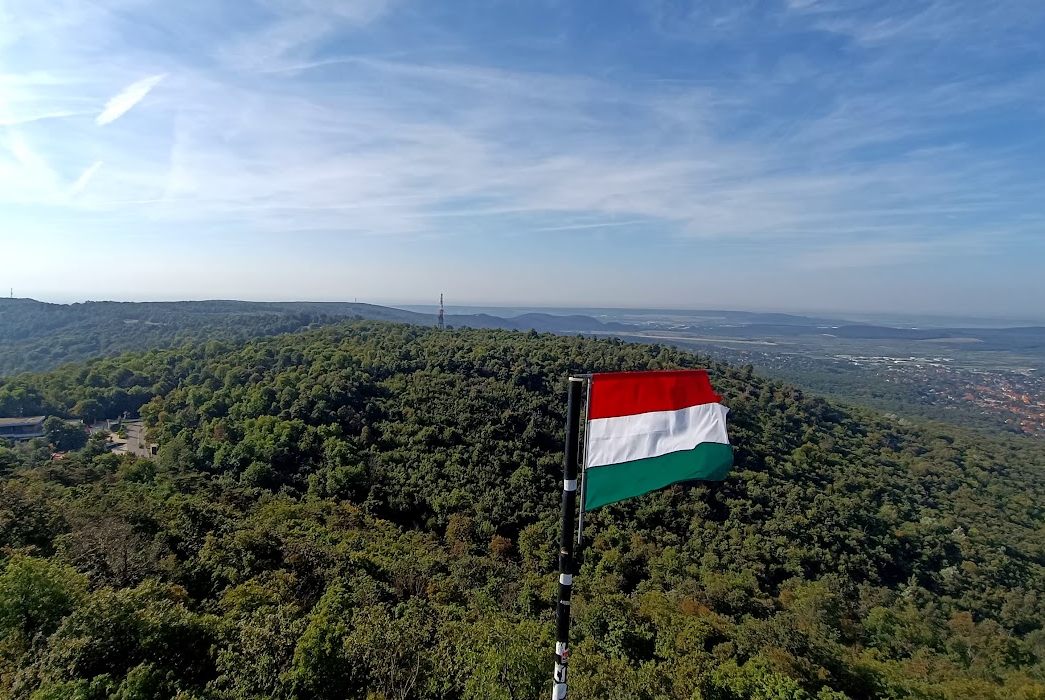
If you don’t feel like leaving the borders of Budapest at once, type Zugliget Chairlift into your GPS and drive to the popular chairlift in a beautiful green area of Budapest. Here you can walk for hours and enjoy a splendid view, and it also offers lots of places where you can park your car.

If you travel with the chairlift, and then walk some more, you can enjoy this splendid view!

Would you like to shop like the locals? Then you can drive to Budaörs, a popular area where you find Decathlon, Ikea, Auchan, Tesco, Aldi, Intersport, and many other stores. This will give you the chance to shop like a local on the outskirts of the city, instead of shopping like a tourist in the popular pedestrian street Váci utca. Do not forget that you need a vignette to visit this area if you approach it using the main highway (if you don’t have a vignette, you can tell your GPS to lead you to this location without using the highway).

This area also has some minor mountains, so if you’d rather enjoy a splendid view and some hills, then enter “Odvashegy utca” into your GPS and drive until you see a place to park your car on the right side (close to Rudolf király emlékpark). There you can leave your car and start climbing upwards immediately.

Cities and areas you should visit outside Budapest.

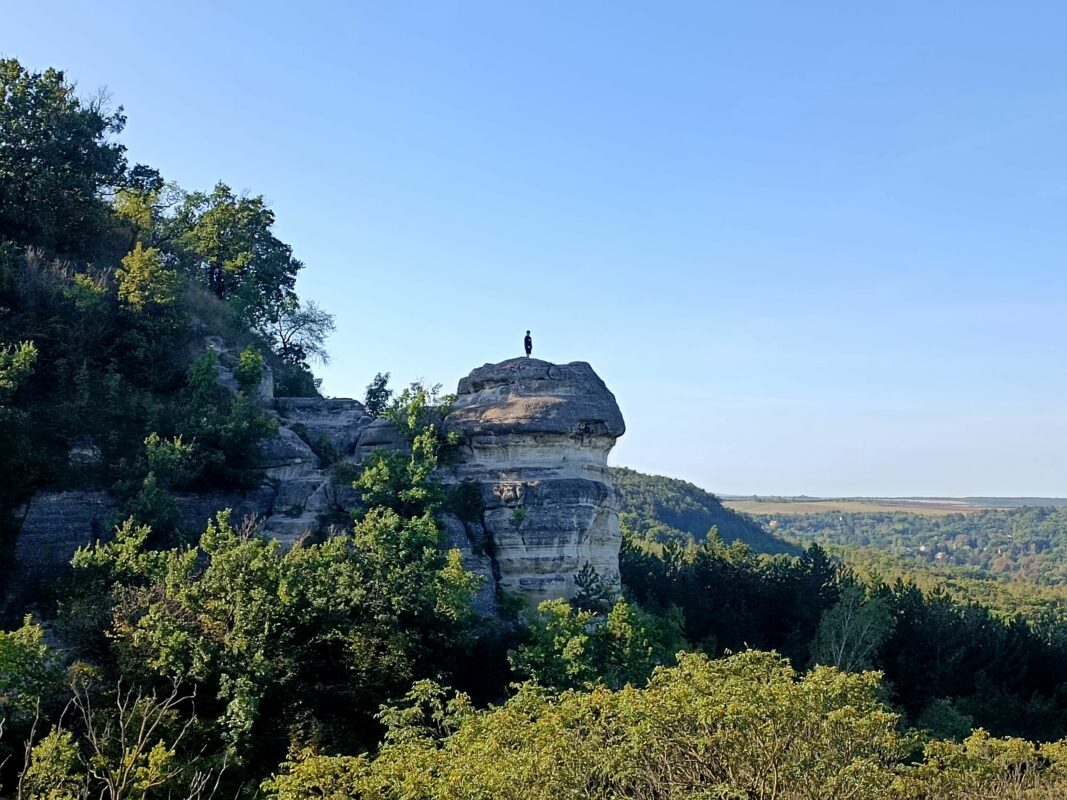
If you want to make a photo like the one you see below, you should enter “Nyakas kő alatti parkoló” into your GPS. It only takes 25-30 minutes to get there from the city center of Budapest, and it is a short walk of 15 minutes from the parking lot to the top of the cliff. You should be careful if it is raining and wet as it can be slippery, but besides that, this is a fantastic program opportunity.

nyakas kö
Nyakas kö, a beautiful place not far from Budapest.

Want to see even more of the beautiful nature and special sights and programs of Hungary? Travel to Egerszalok to see the famous Salt Hills. Not only is it fantastic to look at, but the area is full of SPA hotels, and hot springs, and it gives you an amazing opportunity to explore the countryside and enjoy a recreational location at the same time. If you first visit this area, drive to Eger, the city where the proud women of Hungary protected the city’s castle against the Turkish invaders in the 16th century.

Did you know that one of the most famous sweet white wines in the world is produced in Hungary, in the scenic Tokaj region? Why don’t you drive to this area, taste a lot of wine (while remembering that Hungary has a zero-tolerance policy when it comes to driving and alcohol), and visit the Hungarian “Jesus statue” a visit at its location in Tarcal?

Another option if you want to explore areas not so far from Budapest is to do a day trip in which you combine the three cities Szentendre, Visegrád, and Esztergom. This is a very popular route along the Danube in which you can see the biggest church in Hungary (Esztergom), a beautiful castle and a location where Dracula was imprisoned in the 15th century (Visegrad), and do some shopping and enjoy a walk in the pedestrian street of Szentendre. If you go to Esztergom and decide to walk across the Mária Valéria Bridge, you will suddenly discover that you are in the city of Štúrovo in Slovakia. Isn’t that cool?

As you probably understand, there are lots of places you can and should visit as you explore Budapest and Hungary by car. We hope this article has given you some good ideas, and if you have further recommendations of comments on this topic, please use the comment field below to share what is on your mind.

Pizza Cruise on the Danube in Budapest – Should you buy a ticket?

There are many fantastic boat trips available on the Danube in Budapest. The river is fantastic and the view is even more awesome. Can you imagine watching the beautiful attractions of Budapest illuminated in the evening while eating the best food on earth… pizza? That sure sounds nice, doesn’t it? It is no wonder so many people are interested in buying tickets for the popular pizza boat trip on the Danube. But, is it worth it?

Recently, we published an article about a Dinner Cruise with Live Music on the Danube. In the article, we wrote that even though we are located in Budapest and help book tickets for different boat trips on the Danube in Budapest, we do not necessarily say that all trips are equally good. In fact, if there are boat trips we think you should skip, then we will tell you. So, what is the reality when it comes to the Pizza Boat Trip on the Danube arranged by Silverline in Budapest?

Powered by GetYourGuide

Our experience eating pizza on the Danube in Budapest.

The trip we are discussing is the one you can book tickets for above using the GetYourGuide widget. If you visit the page, you can see several positive and some negative reviews. Here are our thoughts!

The trip itself is great. The Danube is beautiful, and the service on the ship is good. You can drink as much as you want which is ideal if you are thirsty, meaning you can get unlimited soft-drinks, ice-tea and some other drinks.

But, why do you buy tickets for a boat trip on the Danube where they serve you pizza? Because you love pizza. And if you love pizza, then you want the pizza to be good. Unfortunately, that was not so on this ship.

We attended the boat trip with a group of six persons, and you can choose from four different pizzas (that must be done upon booking). We tasted three of the four pizzas (we skipped the Hawaii pizza as none of us appreciate pineapple on pizza).

The pizzas were served, and we were looking very much forward to eating pizza while enjoying the view.

pizza on the danube

The pizzas came and upon first look we felt disappointed. It looked like the cheese and the ham and the ingredients were the cheapest of the cheapest at the nearest super market. Unfortunately, the taste didn’t tell us otherwise. We were then having serious discussions about whether we were actually served a frozen pizza with a basic tomato sauce, and then they just added toppings according to the orders, but we didn’t really come to a conclusion (even though I still believe it was a basic frozen pizza with some toppings added before added on the ship).

We traveled with kids, so our kids had a wonderful time on the Danube, one of my son even makes jokes about this being the best pizza he has ever eaten, but I guess that says more about his attitude than the pizza.

All in all, we will remember the trip, and we had a good time. But, if the goal is to combine a trip on the beautiful Danube in Budapest with a delightful pizza, then you should bring the pizza yourself and not eat the one you are served onboard.

Powered by GetYourGuide

What are your thoughts? Do you have any questions?

This is our experience, but we know from reviews on GetYourGuide that many people have truly enjoyed the trip. Would you like to share your thoughts about the trip? Or do you have any questions?

Please use the comment field below and let us hear from you!